Our Story

Meet the students behind Biology For Me and how we run this curious, collaborative biology blog.
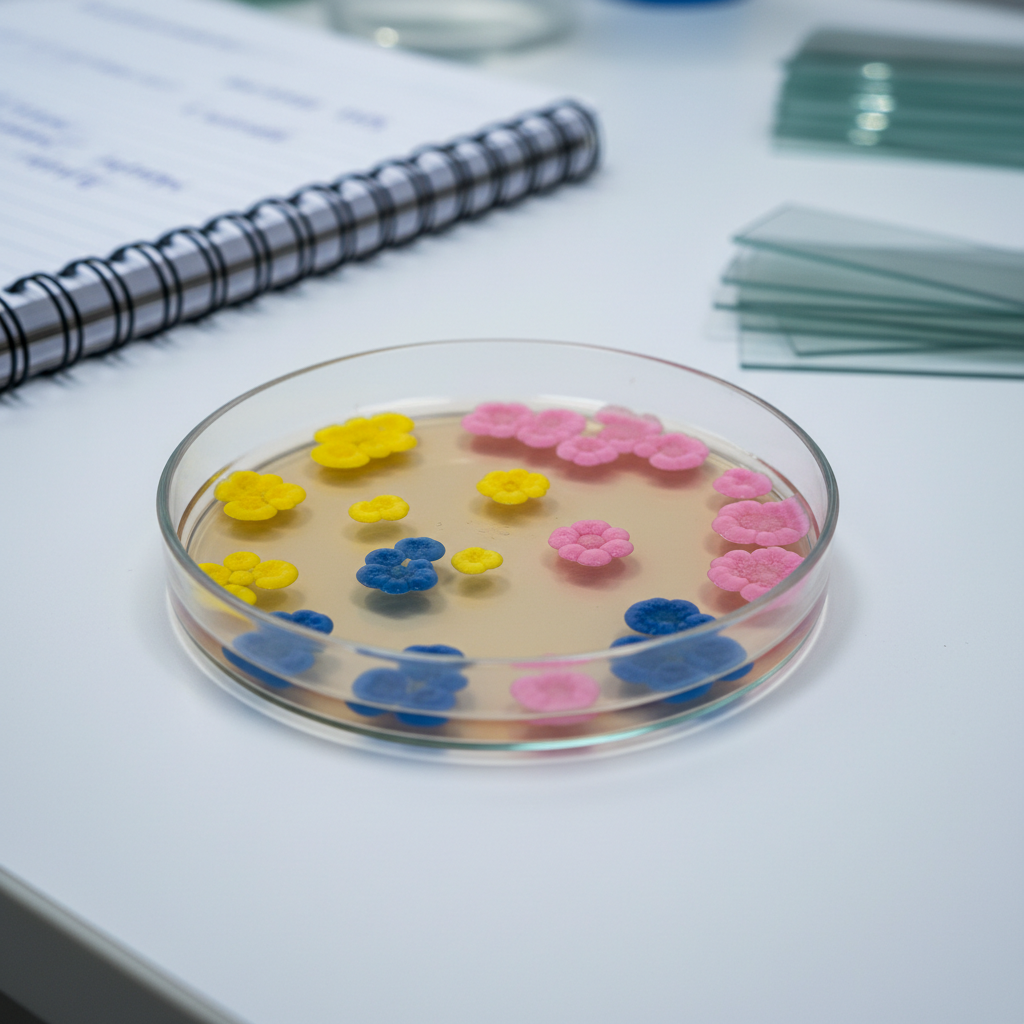
A close-up photographic scene of a transparent petri dish filled with colorful bacterial colonies, each forming distinct round clusters of yellow, pink, and deep blue on a pale agar surface. The dish sits on a matte white lab bench, with blurred scientific notebooks and neatly stacked glass slides in the background. Overhead cool LED lighting creates crisp reflections on the petri dish rim and gentle shadows beneath. The atmosphere is curious and investigative, suggesting student-led experimentation. Captured at eye level with a macro lens, the composition follows the rule of thirds, highlighting the diverse colony patterns while the background softens into clean, modern bokeh for a professional educational blog aesthetic.
A highly detailed, photographic rendering of a DNA double helix model made from clear and colored glass segments, twisting elegantly in mid-air. The helix floats above a sleek black surface in a minimalist studio environment, with only a faint outline of scientific diagrams softly blurred in the background. A single directional spotlight from the upper left creates dramatic side lighting, casting intricate reflections and subtle rainbow highlights through the glass while leaving gentle shadows on the surface below. The mood is sophisticated, modern, and inspiring, evoking cutting-edge molecular biology. Shot from a low-angle perspective to emphasize scale and importance, with a shallow depth of field that keeps the helix razor-sharp against a dark, velvety background.

Our Biology For Me Mission

Biology For Me began as a student passion project to demystify science, spotlight activism, and invite questions. We publish approachable, accurate biology stories for learners everywhere—discover the full journey on our About page.

Student Team

A close-up photographic scene of a transparent petri dish filled with colorful bacterial colonies, each forming distinct round clusters of yellow, pink, and deep blue on a pale agar surface. The dish sits on a matte white lab bench, with blurred scientific notebooks and neatly stacked glass slides in the background. Overhead cool LED lighting creates crisp reflections on the petri dish rim and gentle shadows beneath. The atmosphere is curious and investigative, suggesting student-led experimentation. Captured at eye level with a macro lens, the composition follows the rule of thirds, highlighting the diverse colony patterns while the background softens into clean, modern bokeh for a professional educational blog aesthetic.

Aarav Sharma

CEO

Neuroscience enthusiast who translates complex brain research into clear, story-driven posts for peers.

A highly detailed, photographic rendering of a DNA double helix model made from clear and colored glass segments, twisting elegantly in mid-air. The helix floats above a sleek black surface in a minimalist studio environment, with only a faint outline of scientific diagrams softly blurred in the background. A single directional spotlight from the upper left creates dramatic side lighting, casting intricate reflections and subtle rainbow highlights through the glass while leaving gentle shadows on the surface below. The mood is sophisticated, modern, and inspiring, evoking cutting-edge molecular biology. Shot from a low-angle perspective to emphasize scale and importance, with a shallow depth of field that keeps the helix razor-sharp against a dark, velvety background.

Mateo García

CTO

Passionate about ecology, she connects biodiversity science with everyday choices and youth activism.

A close-up photographic scene of a transparent petri dish filled with colorful bacterial colonies, each forming distinct round clusters of yellow, pink, and deep blue on a pale agar surface. The dish sits on a matte white lab bench, with blurred scientific notebooks and neatly stacked glass slides in the background. Overhead cool LED lighting creates crisp reflections on the petri dish rim and gentle shadows beneath. The atmosphere is curious and investigative, suggesting student-led experimentation. Captured at eye level with a macro lens, the composition follows the rule of thirds, highlighting the diverse colony patterns while the background softens into clean, modern bokeh for a professional educational blog aesthetic.

Zuri Ndlovu

Engineer

Future physician-scientist exploring genetics, ethics, and health equity through accessible, evidence-based articles.

A highly detailed, photographic rendering of a DNA double helix model made from clear and colored glass segments, twisting elegantly in mid-air. The helix floats above a sleek black surface in a minimalist studio environment, with only a faint outline of scientific diagrams softly blurred in the background. A single directional spotlight from the upper left creates dramatic side lighting, casting intricate reflections and subtle rainbow highlights through the glass while leaving gentle shadows on the surface below. The mood is sophisticated, modern, and inspiring, evoking cutting-edge molecular biology. Shot from a low-angle perspective to emphasize scale and importance, with a shallow depth of field that keeps the helix razor-sharp against a dark, velvety background.

Leila Haddad

Designer

Microbiology nerd who loves visual explanations, infographics, and lab stories from the petri dish.

About

How Our Biology Blog Works

We fact-check every post, cite primary research, and prioritize inclusive language. Students pitch topics, receive peer editing, and follow clear submission guidelines so curious readers can trust and build on what they learn here.

A close-up photographic scene of a transparent petri dish filled with colorful bacterial colonies, each forming distinct round clusters of yellow, pink, and deep blue on a pale agar surface. The dish sits on a matte white lab bench, with blurred scientific notebooks and neatly stacked glass slides in the background. Overhead cool LED lighting creates crisp reflections on the petri dish rim and gentle shadows beneath. The atmosphere is curious and investigative, suggesting student-led experimentation. Captured at eye level with a macro lens, the composition follows the rule of thirds, highlighting the diverse colony patterns while the background softens into clean, modern bokeh for a professional educational blog aesthetic.