
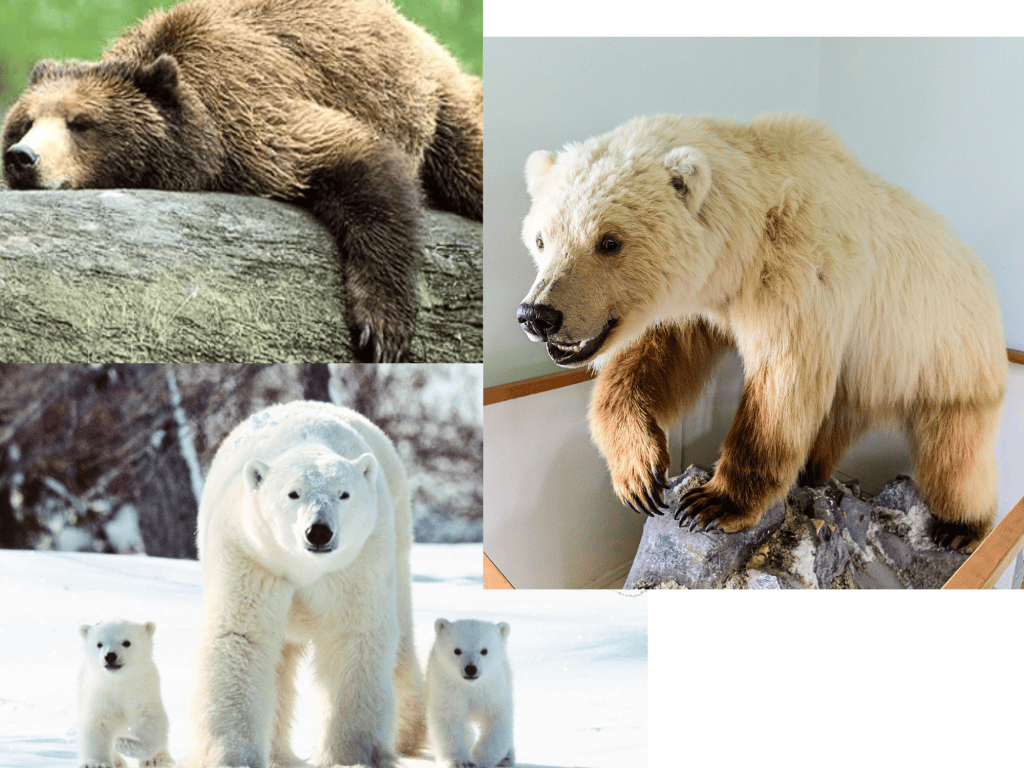
What happens when melting ice brings two separate bear species together? Grolar bears, a.k.a. pizzly bears, are an exceptionally rare cross between a grizzly bear (Ursus arctos) and a polar bear (Ursus maritimus).
Not all species can hybridize successfully. Because since polar bears diverged from grizzlies relatively recently (approximately 150,000 years ago), they have a similar genetic makeup. Moreover, they are separated by geography (allopatric isolation) rather than intrinsic biological or behavioral differences (sympatric isolation). As a result, they are able to produce viable, fertile hybrid offspring (Be Bear Aware).
Still, overcoming this allopatric reproductive barrier is uncommon. Compared to the North American brown bear population of around 55,000 and the global polar bear population of 21,000-31,000 (classifying it as a vulnerable species), the grolar bear population stands at around only 8 individuals worldwide (Be Bear Aware; Wikipedia).
But due to climate change, it’s probable that grolar bear populations will increase as geographic barriers to speciation* dissolve—literally.
As the global temperature climbs, ice in the Arctic is steadily melting. Without sufficient space to hunt, more polar bears are being forced to migrate south to North American lands, thus coming into contact with brown bears.
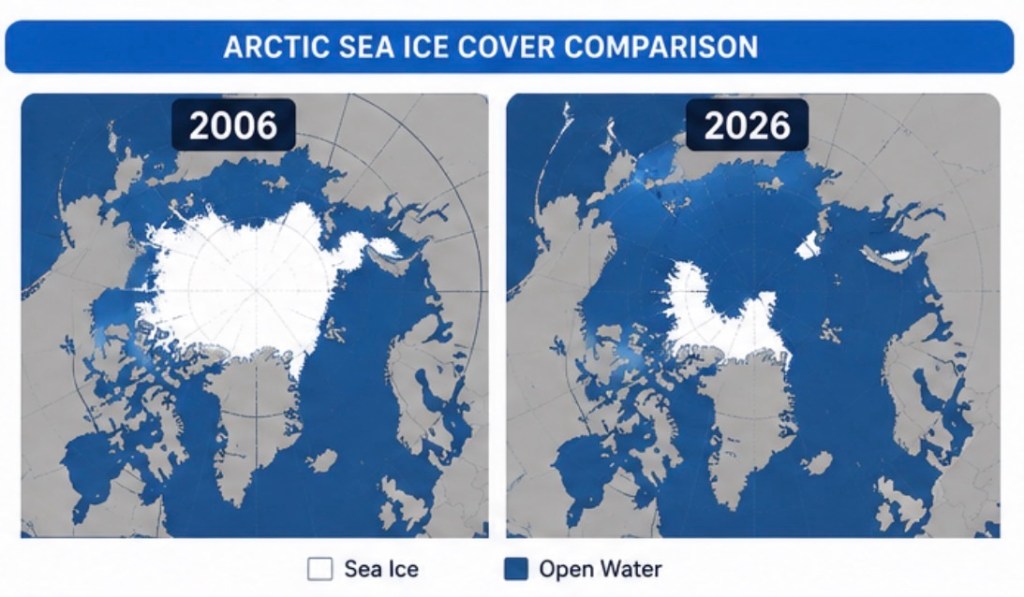
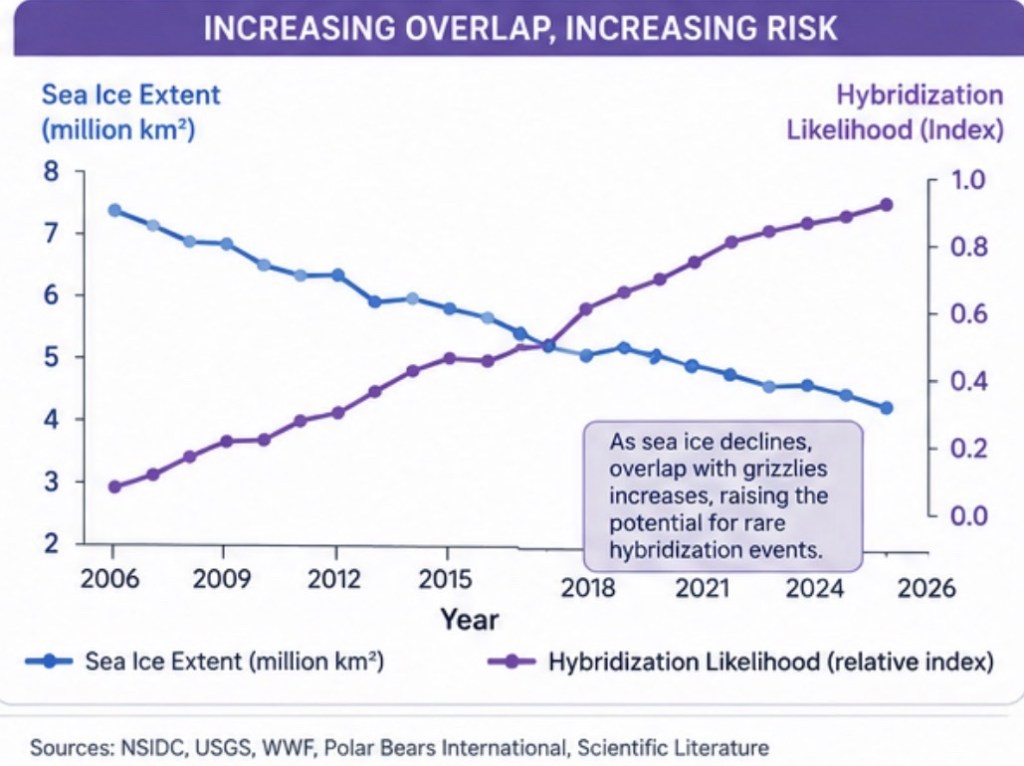
Is this hybridization helpful? As polar bear populations come under increasing threat, hybrids offer potential benefits for species longevity. Hybridization introduces genetic diversity into the gene pool; populations with greater genetic variation are more resilient in changing environments. Hybrids also often possess intermediate characteristics, allowing for broader diets.
However, an increasing hybrid population could reduce the number of pure polar bears in the wild. Furthermore, these intermediate hybrid species may lack the specialized characteristics that allow polar bears to survive in an Arctic environment.
Overall, grolar bears are a unique mixed species exemplifying the effects of climate change on speciation. As global warming continues to reshape habitats, scientists may observe even more unexpected changes in species evolution.
*speciation: the process where one population evolves into two distinct species that become reproductively isolated
References:


Leave a comment