

Every loving dog owner wants to ensure their furry friend lives the happiest life they can. Unfortunately, people often misread their dogs’ emotional needs. In fact, dogs can be more accurate in discerning emotion than owners are. However, new studies on canine cognition can help us better understand and improve the mood of our pets.
- Physical Activity
Exercise is crucial for dogs of all ages. Puppies still developing their bones and joints should aim for 5 minutes per month of age, while adult dogs need 30 minutes to 2 hours of total daily exercise. Dogs are evolutionarily driven to stay active, as they are descended from wolves that traveled long distances to catch prey. Besides maintaining their physical well-being, exercise can also support cognitive health. Studies indicate that physical activity in older dogs can help prevent cognitive decline.

- Mental Stimulation
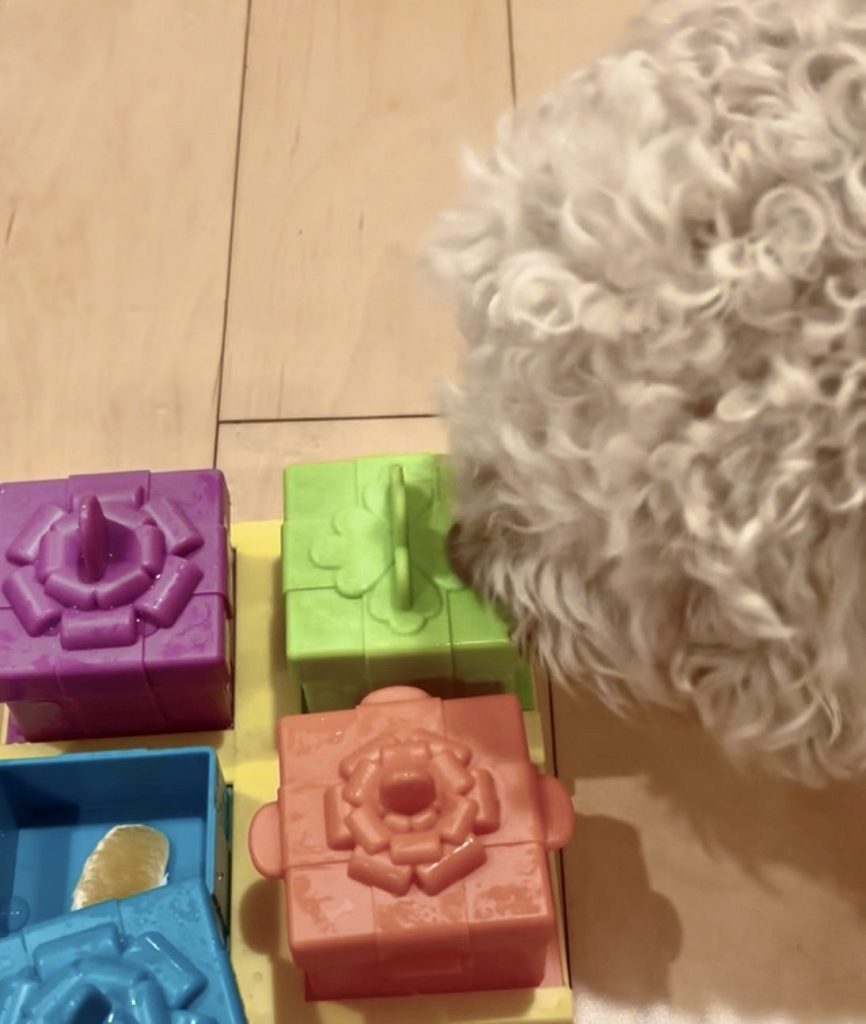
Dogs need to exercise their brains too. In particular, chewing toys releases neurotransmitters such as endorphins and serotonin in dog’s brains, helping them feel calmer. Also, puzzle toys that require logical processing through the prefrontal cortex, especially those with rewards, help trigger the release of dopamine, which promotes pleasant feelings and motivation. The act of rummaging and licking lowers their cortisol and heart rate, promoting relaxation. Furthermore, engaging in challenging activities encourages neuroplasticity, the crucial ability of the brain to form new neural connections.
- Sniffing
Dogs have a sense of smell hundreds to thousands of times more powerful than that of humans with their 300 million olfactory (scent) receptors. They also have a larger olfactory bulb, a processing center for smells that relays signals to the amygdala and limbic system. These structures contain neural networks responsible for emotional sensing and memory, suggesting that scent is central in a dog’s world. Just by smelling a scent, dogs can recall past memories, recognize people, and even determine the age, sex, and emotional state of other dogs.
Because of their hyper-sensitive sense of smell, owners should be mindful when using scented products around dogs. What may seem like a light, refreshing room spray could be a sensory overload for dogs, potentially triggering toxic reactions if inhaled.
- Eye Contact
A natural, mutual gaze (not a staring contest) can help owners and dogs connect on a deeper level. Due to the release of oxytocin, the hormone associated with love and bonding, creating feelings of safety. On the other hand, prolonged, intense staring can be perceived as a threat by dogs as an evolutionary behavioral response from their ancestors (wolves).

- Positive Reinforcement
When training your dog, using positive reinforcement to motivate them is ideal for maintaining a healthy relationship. Different dogs have different preferences for their form of reward—whether it be treats, toys, going for a walk, or verbal praise—yet positive reinforcement generally increases trust and reinforces memorization. Punishment does the opposite: it breaks trust and triggers fear and possibly aggression in the dog. Using punishment to train a dog is not only ineffective, but immoral. Oftentimes, behavior considered “bad”, such as digging in a yard, are merely rooted in normal instincts.
Bonus: Try not to hug your dog! Although hugging is a form of bonding for humans, it can actually heighten stress in dogs. Because dogs evolved to rely on their instinct to flee before they fight, being physically trapped causes them to feel unsafe.
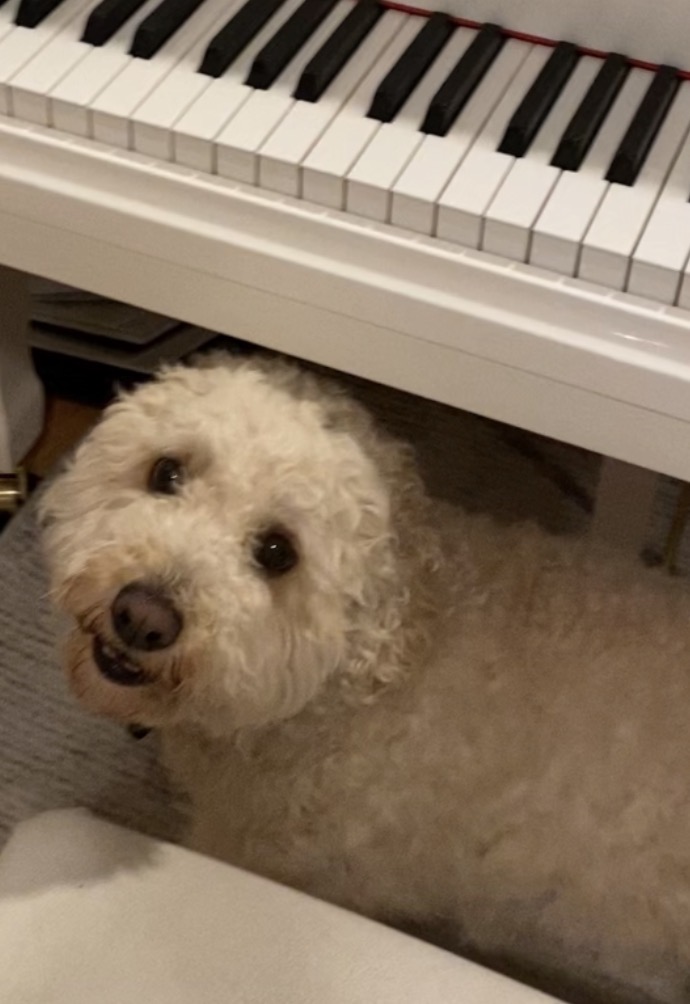
As new research on canine cognition unfolds, owners can better understand and connect with their pets. Providing enough physical and mental stimulation, as well as attention and empathy, can support dogs’ mood and mental well-being. Overall, focusing on being attentive of your dog’s needs and supporting a safe, positive environment can help them live healthier lives.
Works Cited:
Aldred, K. (2023, November 2). A dog’s sense of Smell: Unravelling the canine olfactory marvel. Katey Aldred. https://kateyaldred.co.uk/a-dogs-sense-of-smell/
Bräuer, J., Eichentopf, D., Gebele, N., Jandke, L., Mann, V., Schulte, K., & Bender, Y. (2024). Dogs distinguish authentic human emotions without being empathic. Animal Cognition, 27(1). https://doi.org/10.1007/s10071-024-01899-x
coapeadmin. (2024). The importance of mental stimulation for pets. In COAPE. https://coape.org/the-importance-of-mental-stimulation-for-pets/
Doyle, A. (2021, September 13). How to give your dog enough mental stimulation – polite paws. Polite Paws. https://politepaws.co.uk/how-to-give-your-dog-more-mental-stimulation/
Gibeault, S. (2023, February). Do dogs like hugs? What your dog is really feeling. American Kennel Club. https://www.akc.org/expert-advice/training/should-you-give-your-dog-hugs/
Kaminski, J. (2025). Humans are bad at reading dogs’ emotions – but we can do learn to do better | university of Portsmouth [Review of Humans are bad at reading dogs’ emotions – but we can do learn to do better | university of Portsmouth]. In Port.ac.uk. https://www.port.ac.uk/news-events-and-blogs/blogs/academic-expertise/humans-are-bad-at-reading-dogs-emotions-but-we-can-do-learn-to-do-better
Mobility Service Dogs – West Coast Project. (2023, May 3). How to understand dog body language: Your dog’s eye contact. Mobility Service Dog – West Coast Project. https://mobilitydog.org/blog-about-mobility-service-dogs-and-their-ada-handlers/2023/5/3/how-to-understand-dog-body-language-your-dogs-eye-contact
Positive Reinforcement: Training Your Dog (or Cat!) with Treats and Praise. (n.d.). Mobile SPCA. https://www.mobilespca.org/wp-content/uploads/2018/06/Positive-Reinforcement.pdf
Scientific results: Associations between physical activity and cognitive dysfunction in older companion dogs – dog aging project. (2022). In Dog Aging Project. https://dogagingproject.org/scientific-results-associations-between-physical-activity-and-cognitive-dysfunction-in-older-companion-dogs


Leave a comment