
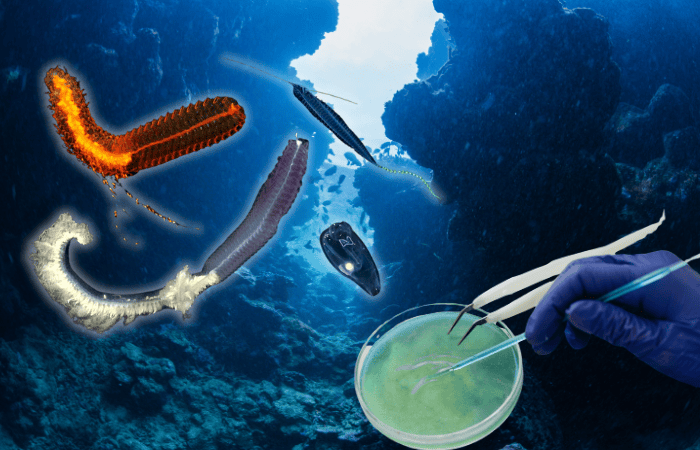
Scientists have mapped more of Mars and the Moon than Earth’s deep sea. In fact, only 0.001% of the deep ocean floor has been explored. The ocean remains a vast, untapped reservoir for biological discovery.
First, what makes deep sea organisms unique? Organisms living in the deep ocean must adapt to extreme conditions, including high hydrostatic pressure, low oxygen, complete darkness, and cold temperatures (with the exception of hydrothermal vents, which can reach 400 degrees Celsius). These evolutionary pressures caused deep sea organisms to synthesize chemicals with structures unparalleled on land.
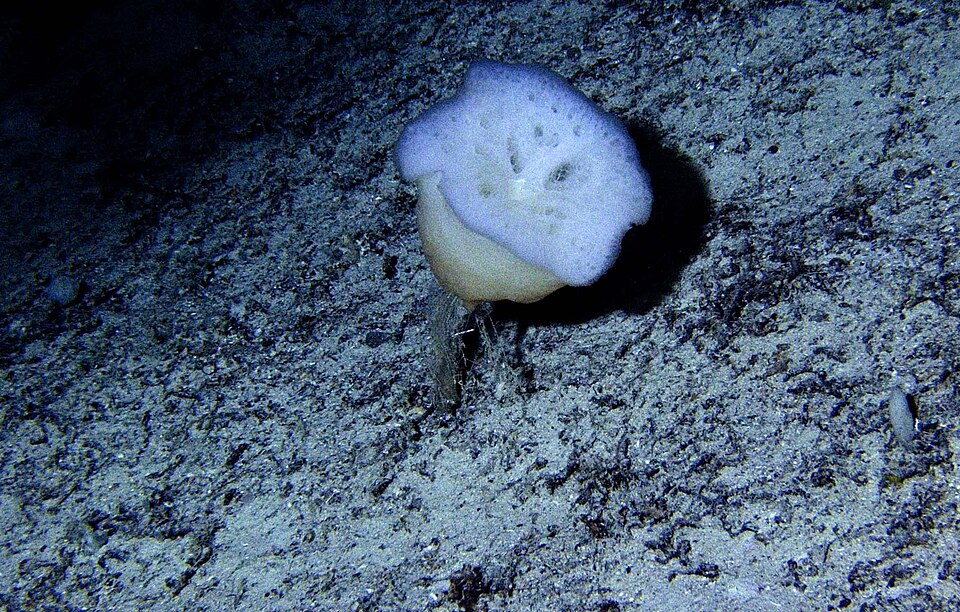
Deep-sea organisms yielding potentially useful chemicals include microorganisms such as bacteria, deep-sea fungi, and actinomycetes, which produce rare biomolecules. Additionally, some invertebrates, such as sponges, corals, sea anemones, and echinoderms (i.e. starfish and sea cucumbers) synthesize powerful secondary metabolites*.
How can deep sea exploration lead to real-world discoveries? Promising applications include treatments for cancer. Deep-sea organisms often have natural responses to hypoxia*, such as inhibiting Hypoxia-Inducible Factor 1 (HIF-1), which is a protein essential for the survival and growth of solid tumors. Additionally, isolating bioactive alkaloids and peptides from certain deep-sea invertebrates and microbes can selectively trigger apoptosis* to kill cancer cells without damaging noncancerous cells.
Deep-sea sediment bacteria also produce secondary metabolites that can inhibit antibiotic-resistant pathogens. In other words, chemicals in these isolated underwater ecosystems can help fight against drug-resistant bacteria. Bioactive peptides and sulfates marine polysaccharides (found in algae and seaweed in shallow waters) in deep-sea bacteria can even defend against viruses by binding to viral proteins and host receptors, thereby blocking viral replication.
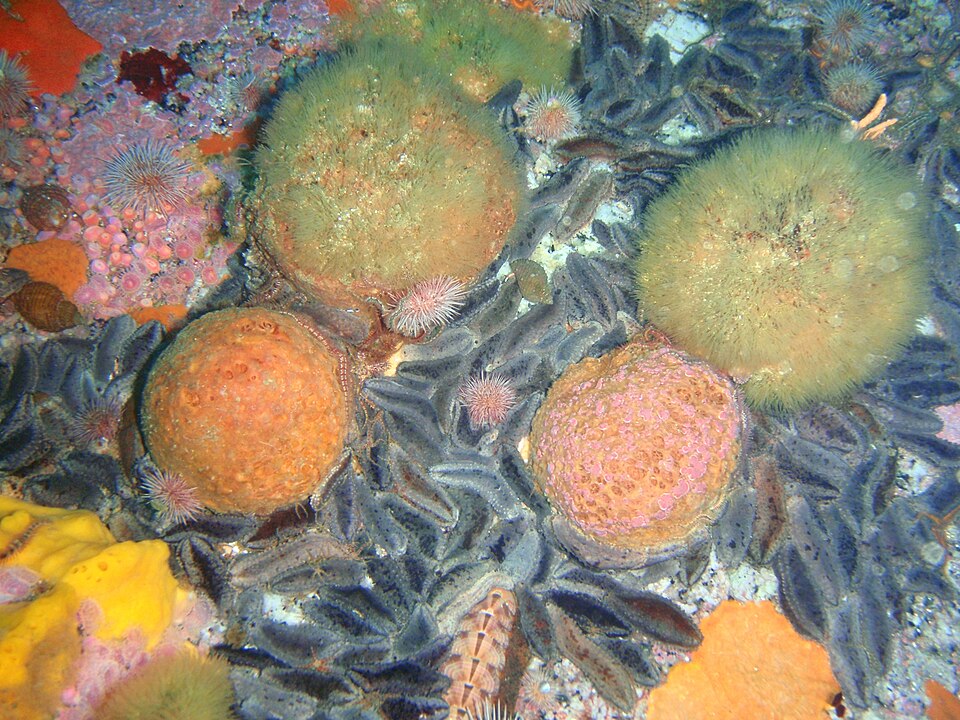
Amazingly, tissues derived from deep-sea sponges can be used for bone repair and tissue regeneration. Typically, severe bone fractures require surgical grafting, which transplants foreign healthy tissue into the damaged area. This comes with limitations such as supply shortages or dangerous immune reactions. However, deep-sea sponges contain polymers that can act as scaffolds resembling human bones while stimulating osteoblasts (forms and hardens new bones) and osteoclasts (dissolves and reabsorbs tissue) for bone repair. With bioengineering, 3D-printed bone implants can be shaped to stimulate natural bone healing mechanisms.
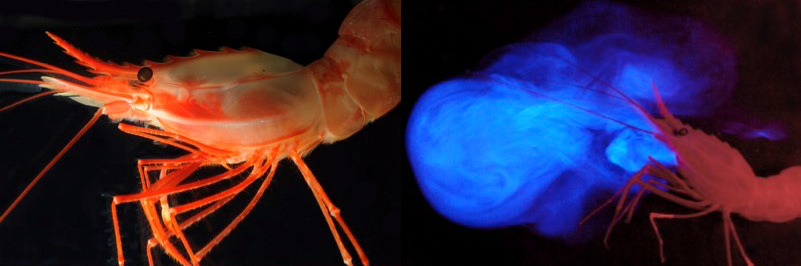
Bioluminescent chemicals found in marine organisms can also serve as a vital tool for tracking the spread of toxins throughout an ecosystem. Because these bacteria can be engineered to respond only when bound to certain chemicals, such as microplastic monomers, they act as “on/off” switches to signal the presence of a specific pollutant. From mapping invisible toxic sediments, tracking harmful microplastics in aquatic environments, to identifying agricultural runoff and heavy metals, bioluminescence can assist with environmental cleanups. On a microscopic scale, bioluminescent proteins can help biologists study gene expression and cellular processes without harming living subjects.
The mysterious deep sea contains a biologically diverse world filled with unique compounds and natural adaptations. Although deep-sea exploration can be costly and requires highly specialized technology, research on these novel environments could lead to biotechnological breakthroughs, new live-saving drugs, and a better understanding of how life adapts in adverse conditions.
*secondary metabolites: organic compounds that assist with survival rather than direct growth, often aiding in defense or communication
*hypoxia: lack of oxygen in the tissues
*apoptosis: programmed cell death
Works Cited:
Aquatic biosensors glow like fireflies as they detect disintegrating plastic debris. (2023). In Environment. https://environment.ec.europa.eu/news/aquatic-biosensors-glow-fireflies-they-detect-disintegrating-plastic-debris-2023-07-05_en
Garcia, M. R., Andrade, P. B., Lefranc, F., & Gomes, N. G. M. (2024). Marine-derived leads as anticancer candidates by disrupting hypoxic signaling through hypoxia-inducible factors inhibition. Marine Drugs, 22(4), 143. https://doi.org/10.3390/md22040143
How much of the ocean has been explored? – NOAA ocean exploration. (2025). In NOAA Ocean Exploration. https://oceanexplorer.noaa.gov/ocean-fact/explored/
Saide, A., Lauritano, C., & Ianora, A. (2021). A treasure of bioactive compounds from the deep sea. Biomedicines, 9(11), 1556. https://doi.org/10.3390/biomedicines9111556
Wang, X., Schröder, H. C., Feng, Q., Draenert, F., & Müller, W. E. G. (2013). The deep-sea natural products, biogenic polyphosphate (Bio-PolyP) and biogenic silica (bio-silica), as biomimetic scaffolds for bone tissue engineering: Fabrication of a morphogenetically-active polymer. Marine Drugs, 11(3), 718–746. https://doi.org/10.3390/md11030718
Yeh, H.-W., & Ai, H.-W. (2019). Development and applications of bioluminescent and chemiluminescent reporters and biosensors. Annual Review of Analytical Chemistry, 12(1), 129–150. https://doi.org/10.1146/annurev-anchem-061318-115027


Leave a comment